Category: Equity and shared vision

Mental health, school social work

  • Therapy in the Dark

    I’ve turned out the lights and done couple’s therapy in pitch dark. This started when I did home visit with a couple in their home in Tokyo. The woman had been crying, she didn’t want to come to living room and asked to turn off the lights; They had one of their most productive conversations ever. The husband was often demonstrative with his hands while he talked. In the dark, she was less tenuous when she spoke. A few weeks later at the office, we turned out the lights again; I found they were less reactive to visual cues and facial expressions. Their tone was thoughtful, and patient. Since then, I’ve introduced ‘therapy-in-the dark’ to couples and families in family therapy. Many families find it to be helpful.

  • Suicide Prevention re-examined

    https://www.latimes.com/california/story/2023-11-30/dead-at-16

    Suicide Prevention policies, practices and procedures must use continuous cycle of inquiry and improvement.

  • MTSS Misunderstood

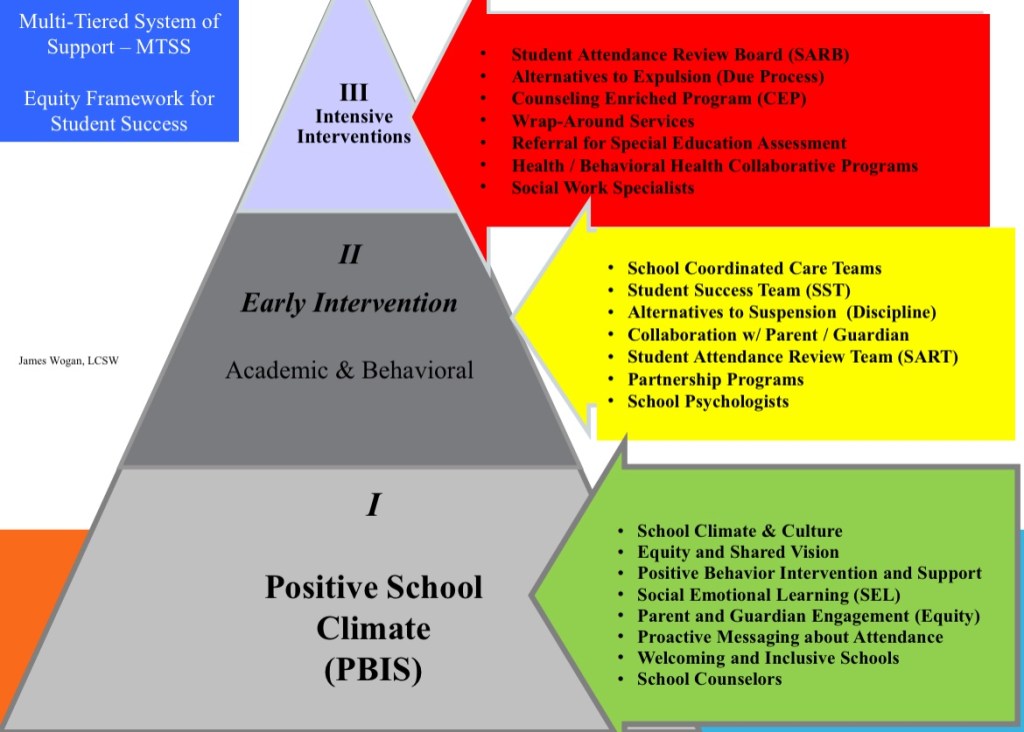
    I recently consulted with an agency about School Coordinated Care Teams and the over identification of African-American children in Special Education, known as “Significant Disproportionality.” Utilizing ‘Expanded Equity Partnerships,’ school-based support services are managed and coordinated by School Coordinated Care Teams.

    Leaders in this District insist that School Coordinated Care Teams are “MTSS Tier 1.” For example, District says “There’s no point is doing Tier 2 and Tier 3 interventions if schools aren’t doing Tier 1 (PBIS School / Climate) with fidelity.” This misunderstanding is widely held, but only partially accurate. School climate is very important to be sure, but usually not the source of trauma, hardships, and stressors many students face.

    Unfortunately, support services are currently stalled out for many under-served students. MTSS was not developed to deny support services to children, but sometimes, this is what plays out.

    A rising tide does not lift all boats equally.

    Fortunately, we have more opportunities to support kids. Let’s work together on systemic social justice issues, access to behavioral health services, and access to education, i.e. all three tiers concurrently.

    I recommended books, Developing your School’s Student Support Teams, Street Data, excellent work of Zaretta Hammond, and publications by West Ed, Break Barriers, and others.

  • “It’s whatever.”

    In therapy, some teens decided to say “it’s whatever” less often. “Words matter, what you say to yourself, and just what you say, that affects your brain,” teenager explained in their own words. “I mean sometimes we need to say ‘it’s whatever” because we’re letting things slide, but like saying it too much starts to feel like we don’t care about stuff.”

    A 16-year old said he’s going to say “it’s whatever” 30% as much as he does currently.

    You know, always growing and learning. That’s good for our mental health, and good for community.